Two quant traders who got tired of the race.
For years we designed and ran market-making and statistical-arbitrage strategies. If you know the models, Avellaneda-Stoikov, Cartea-Jaimungal, pairs and basket arbitrage, you know what that life is: a very small edge that does not last, a model to re-estimate every few days, a new asset to calibrate every week, and a latency budget where one millisecond separates a strategy that earns from one that bleeds. The research never stops, and neither does the adaptation.
Simpler, slower, reproducible
We wanted the opposite: something we could sit down with once every few weeks, not every night. Strategies with a logic a human can read, built from setups that have been traded for decades and still work because they rest on how sessions open, how ranges break and how prices return to value, not on a speed advantage someone will take from us next quarter.
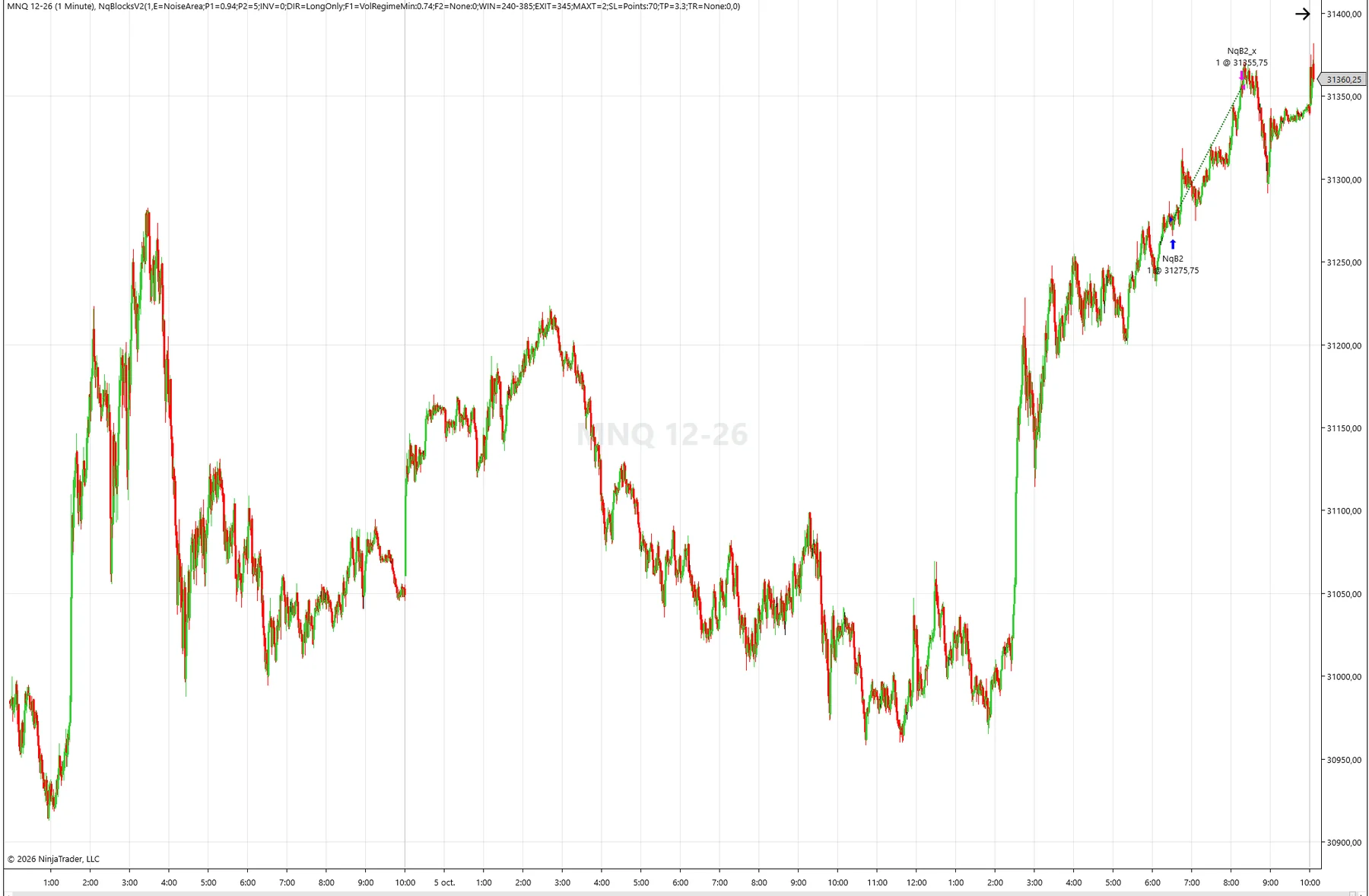
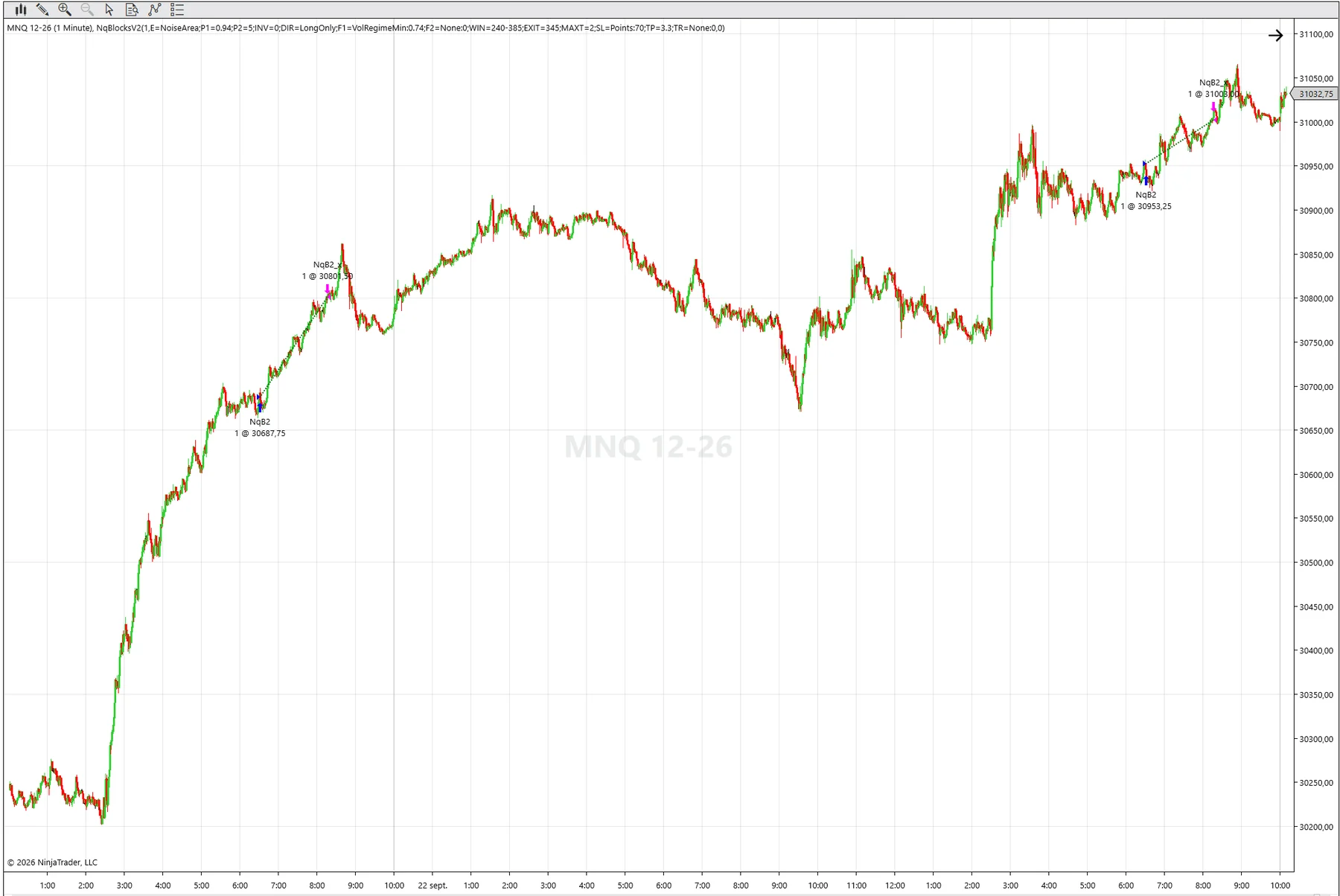
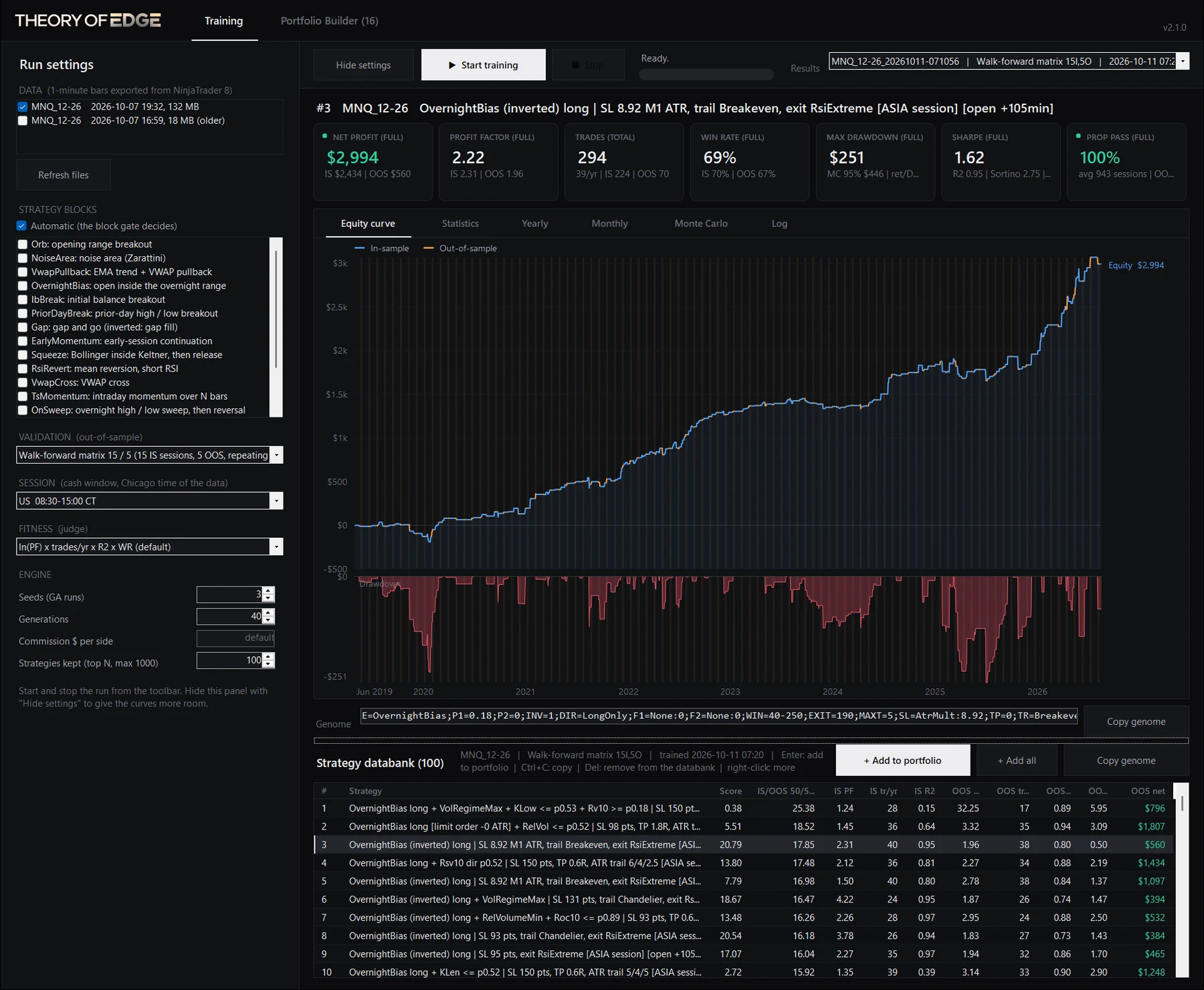
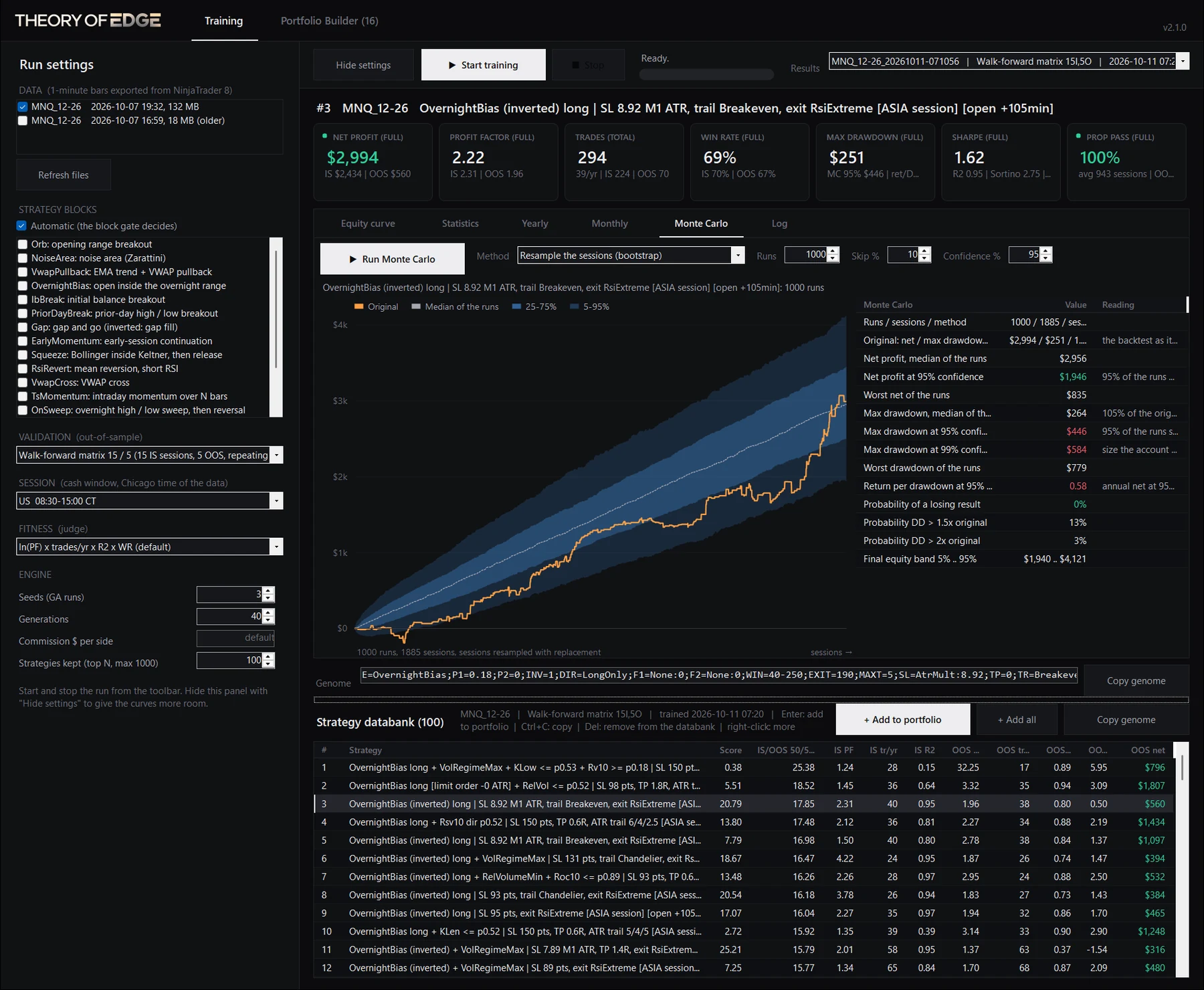
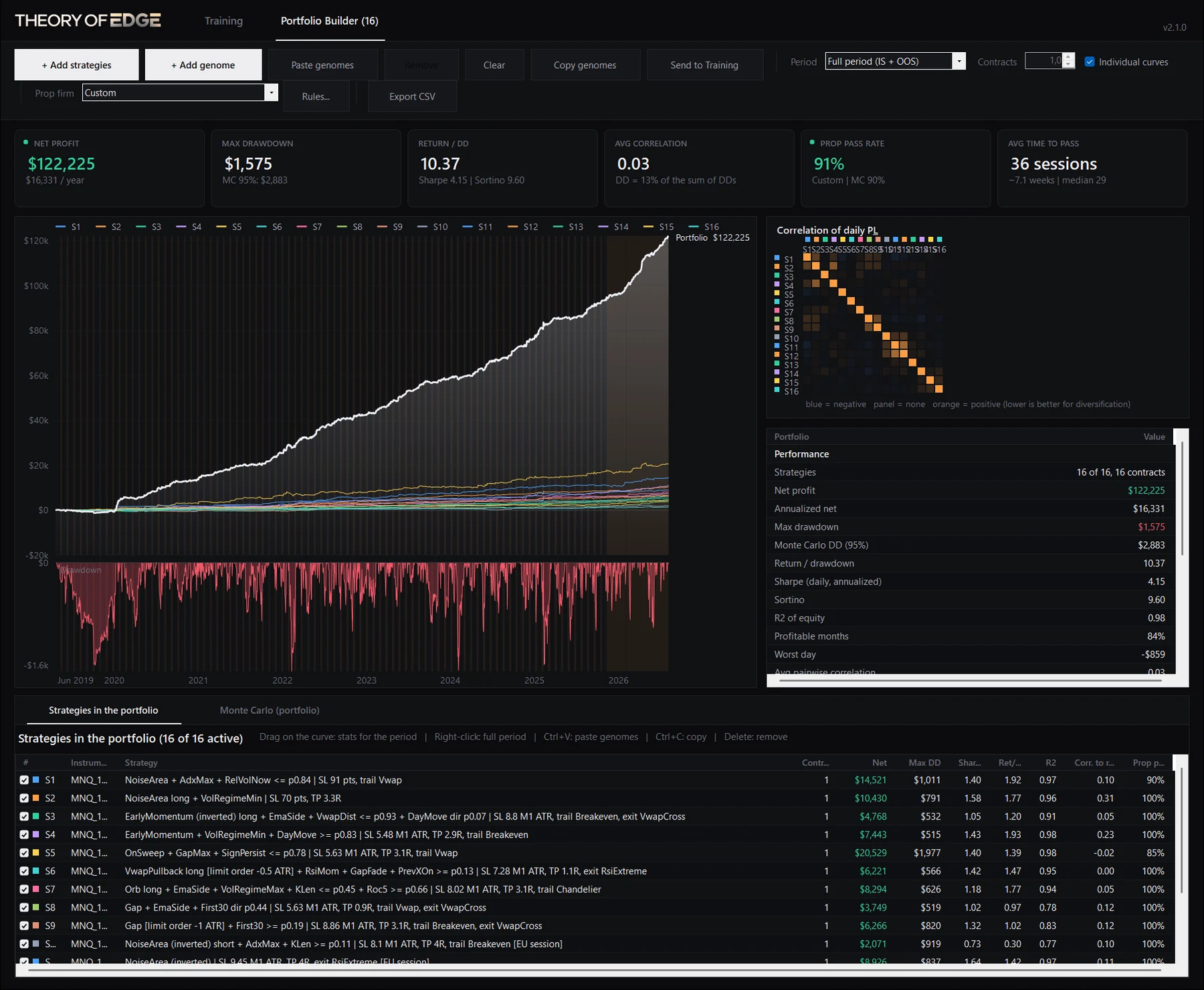
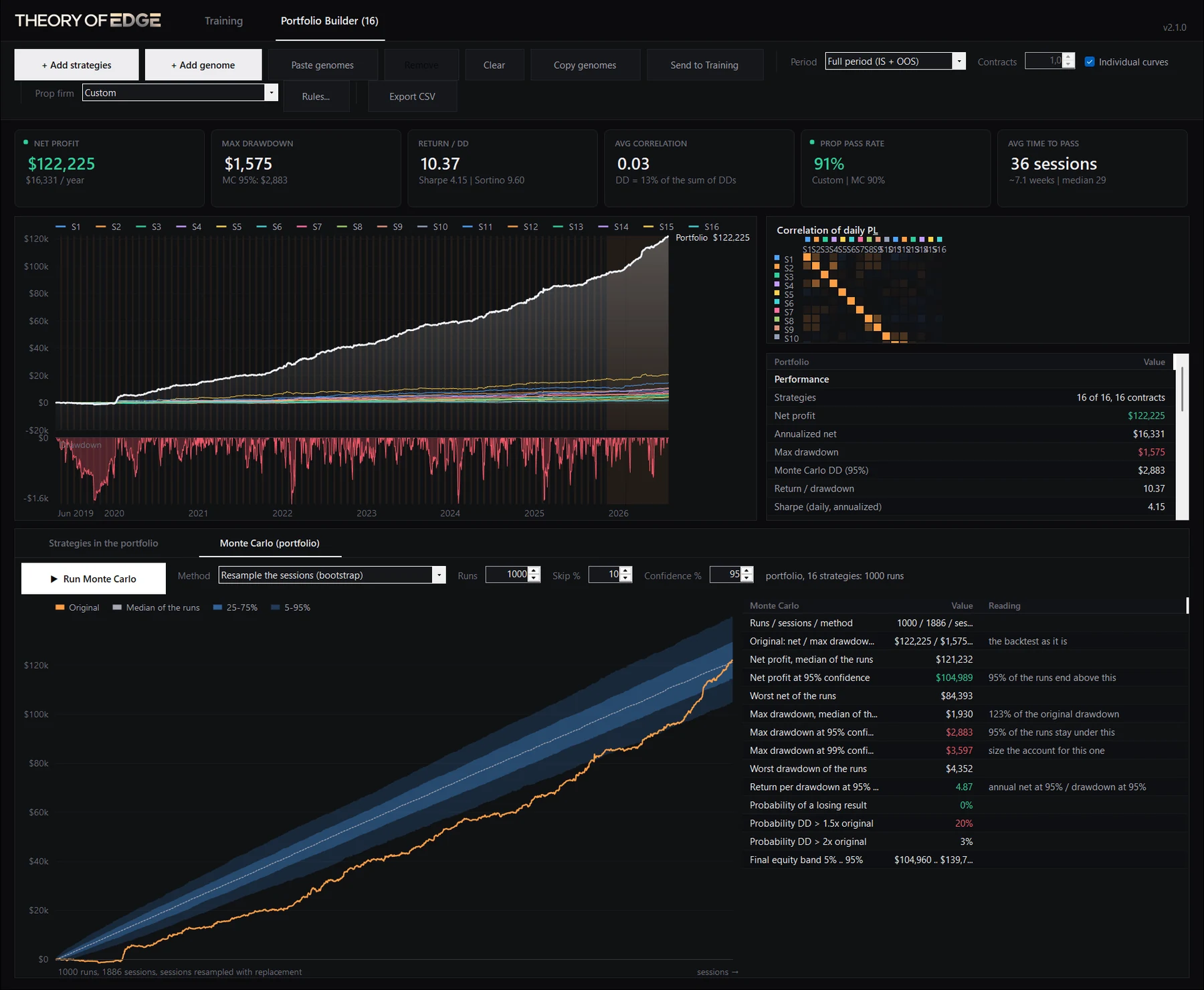
So we built, for ourselves, a strategy builder: it breeds thousands of readable strategies from those setups, keeps only the ones that hold up on data they never saw, and lets us assemble them into portfolios. That tool is what you are looking at.
Where cash flow starts without a large balance
We talked to many traders before opening it up. Most of them wanted the same thing: to pass a prop-firm evaluation. They are right to. For a trader without a large balance, a funded account is the fastest path to real cash flow, and an evaluation is a well-defined problem: a profit target, a loss limit, a number of days. A problem with limits is a problem you can simulate.
That is why the Portfolio Builder has a challenge simulator: you enter the rules of the firm you are looking at, and the Studio tells you how often a portfolio started on a past date would have passed, and in how many sessions.
Focus where things are simple and repeatable
The whole project rests on one belief: it is better to be very good at something simple, repeatable and relatively easy than average at something brilliant and fragile. An ultra-refined model can be beautiful and still collapse on a data-feed hiccup. A portfolio of plain intraday setups, tested out of sample, sized on its bad days, is boring. Boring is what we were after.
We use it ourselves. We do not sell signals, we do not manage money, and we do not promise results: we give you the tool and the numbers, and we tell you where they come from.